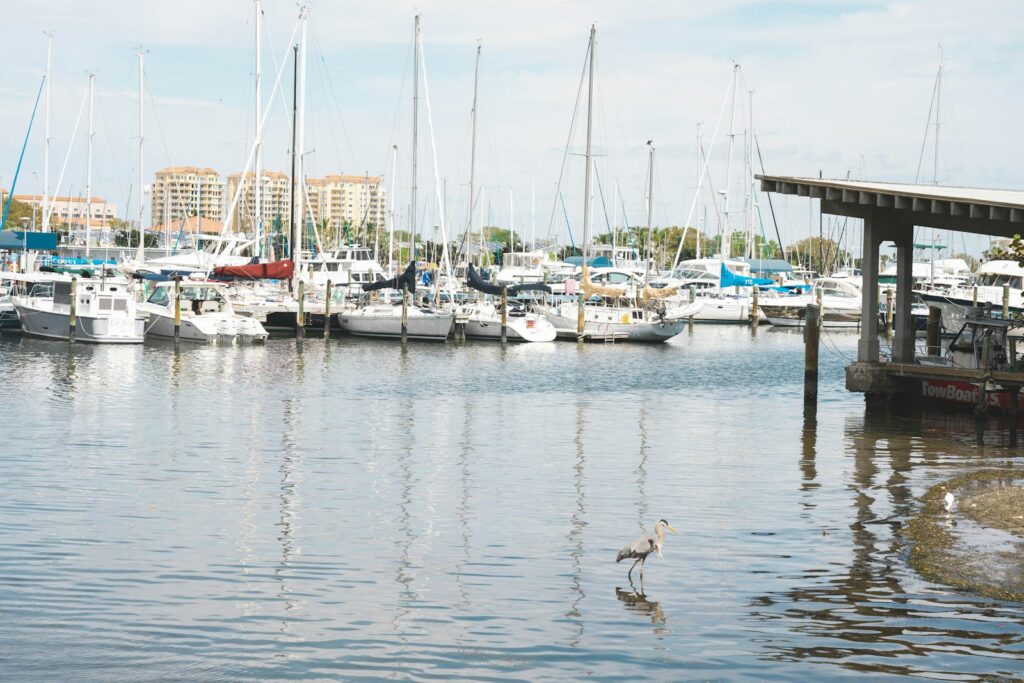
Pinellas is a peninsula, packed with cities, with water on three sides. That shape drives the rules: each city sets its own business tax, the county runs its own contractor board, and storms come in from the Gulf. Our office is across Old Tampa Bay in downtown Tampa. We work with Pinellas owners by phone, email, and video.
Greg Neilsen, JD, LLM (Master of Laws in Taxation), reviews our guides. Last reviewed: October 5, 2026.
Each answer is below.
Yes, if the business is located inside St. Petersburg city limits. The city calls it a Business Tax Certificate Receipt.
Pinellas County itself does not issue one. The county repealed its occupational license in 1995. So in Pinellas, the receipt comes from your city, not the county.
St. Petersburg receipts expire September 30. Contractors must show an active state certificate, registration, or license before the city issues the receipt.
Example: A St. Pete painting company renews in December instead of September. Florida’s penalty schedule reaches 20 percent by December. On a $150 receipt (a made-up figure), that is $30 for paying late.
Each city sets its own rule. A business in unincorporated Pinellas needs no county receipt at all. A business inside a city should call that city.
Clearwater requires a receipt for every business located in its city limits. Its tax year runs October 1 to September 30. Clearwater no longer registers outside businesses that just work there, but some contractors who pull permits must still register with its Building Department.
Example: A pool service company is based in unincorporated Pinellas and cleans pools in Clearwater. It needs no county receipt and no Clearwater receipt for its location. If it starts pulling permits for equipment swaps in Clearwater, it checks with the Building Department first. The county’s address lookup at pinellas.gov shows which side of a city line an address sits on.
Yes, if you hold a state-certified license. Pinellas requires certified contractors to register the license with the county and file proof of insurance. The Pinellas County Construction Licensing Board, called PCCLB, handles it from 440 Court Street in Clearwater.
Florida has two license types. A certified contractor can work in any Florida jurisdiction. A registered contractor can work only where the local competency was earned.
Example: A Tampa roofer with a state-certified license wins a reroof in Dunedin. Before the permit, the roofer registers the license with PCCLB and files the insurance certificate. A roofer holding only a registered license from Hillsborough cannot take that job.
April 1. Anyone holding business assets on January 1 files a return with the Pinellas County Property Appraiser at pcpao.gov. That includes self-employed contractors.
Filing on time earns an exemption on up to $25,000 of value. Businesses that already claimed the exemption get a renewal postcard in December. If your equipment stays at $25,000 or less, and you get the postcard, you skip the return. Cross $25,000 and you must file.
Example: A pool service company owned $22,000 of pumps, vacuums, and tools last year and got its postcard. In 2026 it adds $9,000 of equipment, so its total passes $25,000. The postcard no longer covers it. It files by April 1 and keeps the exemption on the first $25,000.
7 percent: the 6 percent state rate plus Pinellas’s 1 percent surtax. The surtax follows the delivery address. It applies to the first $5,000 of any single item.
Example: A pool contractor buys a $6,500 heater delivered to a Clearwater home. State tax is $390. Surtax is 1 percent of $5,000, or $50. Total: $440. Delivered to a Tampa home across the bay, Hillsborough’s 1.5 percent surtax applies: $75, for $465 total.
Florida’s hurricane season runs June 1 to November 30. On a peninsula, one storm can stop work countywide.
When FEMA declares a disaster, the IRS often postpones federal filing and payment deadlines in the covered counties. Each relief notice is issued per storm. We read the notice for your county before we change any date.
Example: A roofer collects $90,000 of deposits in the six weeks after a storm. On the cash basis, deposits count as income when they arrive. We set aside 25 percent, or $22,500, in a tax account that month, so the cash for the tax is there in April.
Yes. We serve St. Petersburg, Clearwater, Largo, Pinellas Park, Dunedin, Palm Harbor, Tarpon Springs, Seminole, and the beach towns. Nearly all of the work runs by phone, email, and video. Our Channelside office is open to you too.
We know pool service, roofing, remodeling, and painting books well.
From $750 a month, one flat fee covers bookkeeping, tax preparation, and planning on most plans. You see the fee in writing before we start. It is set after we look at your books. No onboarding fee.
We keep your books in QuickBooks Online, run payroll through Gusto, and track cards in Ramp. We connect the field software you already use, like ServiceTitan or Jobber. Start with our bookkeeping service. The written tax plan comes with the Planned plan.
No. Most Pinellas owners work with us by video and phone. You are welcome at the office whenever a sit-down helps.
No county receipt. Pinellas repealed it in 1995. You may still need state licenses, and any city where you have a location may require its own.
Only if your equipment stayed at $25,000 or less on January 1. If you bought enough to pass that line, file the return by April 1.
No. Registration records your state-certified license and insurance with the county.
Yes. We sort deposits, subcontractor payments, and materials by job, then catch the books up month by month.
This page is educational and is not tax or legal advice for your situation. City and county rules change. Confirm receipt and license requirements with the issuing office before you act.
Greg Neilsen, JD, LLM (Master of Laws in Taxation), reviews our guides. Last reviewed: October 5, 2026.
One free 15-minute call with Greg. Bring your questions. Leave knowing what Zero Tax would handle for your business and what it would cost.
Book a free 15-minute callNo pressure, no obligation. Just clarity.