
A Florida contractor who installs materials into a building usually pays sales tax to the supply house and charges the customer none. Plenty of trade businesses get it backward. The tax turns on how the contract prices the job, so the paperwork you sign before work starts decides who owes it.
Greg Neilsen, JD, LLM (Master of Laws in Taxation), reviews our guides. Last reviewed: October 5, 2026.
Each answer is below.
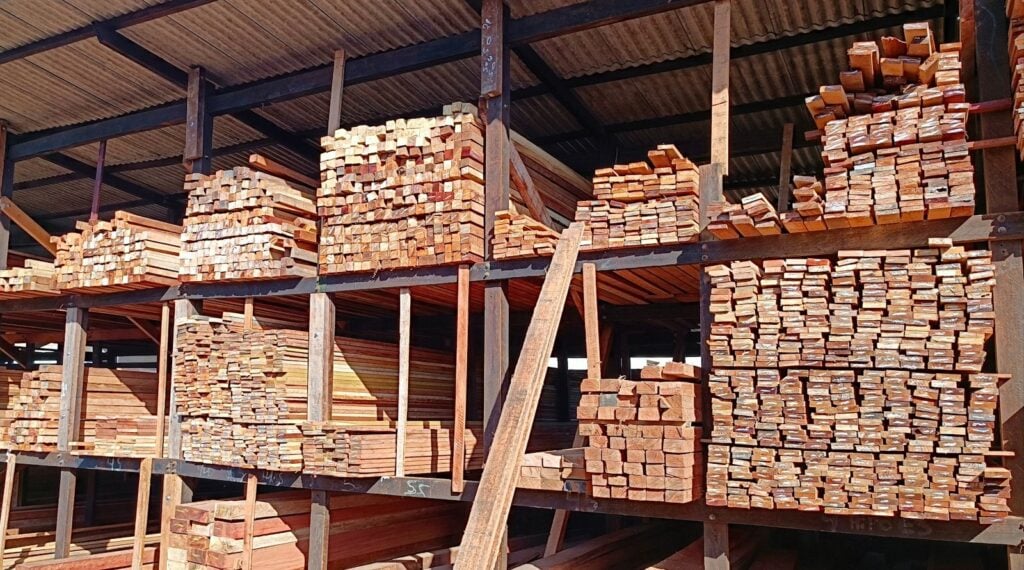
Usually not. A contractor who improves real property is the final consumer of the materials. The contractor pays tax when buying them and charges no tax on the job.
Real property means land, buildings, and fixtures. Florida’s rule lists the trades it treats as real property work: plumbing, electrical, HVAC, roofing, painting of buildings, flooring, tile, carpentry, landscaping, pools, and dozens more.
The contractor should charge no tax even when the invoice breaks out materials and labor. A contractor doing only this kind of work should not register as a dealer, unless it fabricates items in its own shop for use on jobs.
Example: A Tampa plumber replaces a homeowner’s water heater for a lump-sum price of $2,800 installed. The plumber bought the heater at a Hillsborough supply house for $1,400 and paid 7.5 percent tax, or $105. The homeowner’s invoice shows $2,800 and no sales tax.
Our plumbing accounting page covers how we book jobs like this.
Florida Administrative Code Rule 12A-1.051 sorts contracts by how they are priced. Four of the five types work the same way. Only one makes the contractor a seller.
| Contract type | How the tax works |
|---|---|
| Lump sum: one stated price for materials and labor | Contractor pays tax on materials. Customer pays no tax. |
| Cost-plus or fixed fee: costs reimbursed plus a set fee or percentage | Contractor pays tax on materials. Customer pays no tax. |
| Upset or guaranteed maximum price: cost-plus with a ceiling | Contractor pays tax on materials. Customer pays no tax. |
| Time and materials: marked-up materials plus billed hours | Contractor pays tax on materials. Customer pays no tax. |
| Retail sale plus installation: every material itemized and priced in the contract before work begins | Contractor registers as a dealer, buys the itemized materials tax-free, and charges tax on the materials. Installation labor is not taxed. |
Every material going into the job has to be itemized and priced before work starts. If even some materials are missing from the list, the contract does not qualify. The customer also has to take title and risk of loss as the materials are delivered.
A proposal is not the contract. Neither is an invoice sent after work begins. Florida looks at the agreement the two sides signed before the job started.
No. Under Florida’s rule, a time-and-materials contract is taxed like a lump-sum job. The customer is buying a finished job, not a pile of materials, so the contractor is the consumer.
Example: A remodeler signs a time-and-materials contract for a Brandon kitchen. The remodeler buys $12,000 of cabinets, tile, and fixtures, with no single item over $5,000. It pays 7.5 percent tax at the counter, or $900. The invoice bills materials at a 20 percent markup, $14,400, plus 160 hours at $75, or $12,000. The customer pays $26,400 and no sales tax line appears.
When it sells goods without installing them. A water heater sold over the counter is tangible personal property at the moment of sale, even though the buyer will install it in a house. The seller collects tax on the full price.
A contractor who both installs materials and sells some over the counter is a dual operator. Florida expects it to register as a dealer. It may buy stock with its Annual Resale Certificate (Form DR-13), then settle the tax once it knows what happened to each item.
Example: The same plumber sells an identical $1,400 water heater over the counter for $1,800 to a homeowner who will install it. The plumber bought that heater tax-free with its resale certificate. It collects 7.5 percent on $1,800, or $135, and remits it on its sales tax return.
You owe use tax on them. Materials bought for resale and then used on your own jobs are taxable to you at cost. Florida requires the tax to be reported and paid on the return, along with surtax.
Misusing a resale certificate carries civil and criminal penalties. Buying shop tools, office supplies, or job materials tax-free with it, when you know you will use them yourself, is the trap Florida’s rule warns about.
Example: A Hillsborough plumbing company registered as a dealer buys $8,000 of fixtures in one month with its resale certificate, no item over $5,000. It sells $2,000 of that stock over the counter for $2,600 and collects $195. It installs the other $6,000 on lump-sum jobs in the county.
It owes use tax of 7.5 percent on the $6,000, or $450. Its return for the month reports $645 of tax.
Yes. Repairing tangible personal property is a taxable sale. Repairing or installing part of the building is real property work.
Florida’s rule names items that stay personal property even when installed: household appliances unless built in and directly wired, window air conditioners, freestanding cabinets, and machinery or equipment. When parts are furnished, Florida taxes the whole repair charge, labor included. The rule names water heaters and central heating and cooling components as part of the building, not equipment.
Example: An HVAC company repairs a homeowner’s window air conditioner and bills $240 for parts and labor. In Hillsborough the company collects $18, 7.5 percent of the full $240. The same week it replaces a condenser on a central system for $3,500. That job is real property work: the company paid tax on the condenser and charges the homeowner none.
The state rate is 6 percent. Most counties add a discretionary sales surtax. In Hillsborough County the surtax is 1.5 percent for 2026, for a total of 7.5 percent.
The surtax applies only to the first $5,000 of a single item of tangible personal property. The $5,000 cap does not apply to services or commercial rentals. A dealer collects surtax at the rate of the county where the goods or services are delivered.
Example: A contractor buys a $9,000 trailer-mounted pressure washer from a Hillsborough dealer. State tax is 6 percent of $9,000, or $540. Surtax is 1.5 percent of the first $5,000, or $75. Total tax is $615, not $675.
Nonresidential cleaning and nonresidential building pest control are taxable services. Cleaning or pest control at a home is not. The tax is 6 percent plus surtax on the full charge.
Example: A commercial cleaning company bills a Tampa office $3,000 a month. It adds 7.5 percent, or $225, and remits it. The same crew cleans a house for $3,000 and charges no tax.
Our commercial cleaning accounting page covers how we track the two on separate lines.
Register online with the Florida Department of Revenue. You receive a Certificate of Registration and an Annual Resale Certificate. A return is required for every period, even when no tax is due.
Returns are due on the 1st and late after the 20th of the month after each period. Monthly filing is the default. Florida allows quarterly filing at $1,000 or less of tax over the prior four quarters, semiannual at $500 or less, and annual at $100 or less.
Filing and paying electronically earns a collection allowance: 2.5 percent of the first $1,200 of tax, so up to $30 a return. A late return costs 10 percent of the tax, with a $50 minimum, even when no tax is due.
Yes, if no Florida tax was charged and the item comes into Florida for use. Use tax is 6 percent plus surtax, the same as sales tax. Florida gives credit for sales tax paid to another state.
Example: A roofer orders $3,000 of underlayment from an out-of-state supplier that charges no tax. The roofer uses it on a Hillsborough job. It owes $225 of Florida use tax. Had it paid $120 of another state’s sales tax, it would owe the $105 difference.
Not for rent periods starting on or after October 1, 2025. Florida repealed the state sales tax and surtax on commercial rent, covering offices, shops, warehouses, and storage units. Rent for periods through September 2025 is still taxable, even if you pay it late.
Example: A contractor rents a Tampa shop for $4,000 a month. Before the repeal, the 2 percent state rate plus 1.5 percent surtax added $140 a month. From October 2025 on, the rent carries no sales tax, about $1,680 saved a year.
We start with how you price jobs. Lump sum, time and materials, counter sales, and repairs each land in their own account in QuickBooks Online, so taxable and nontaxable sales never mix. We connect your field software, Jobber, Housecall Pro, ServiceTitan, or Buildertrend, rather than replace it.
One flat monthly fee covers bookkeeping, tax preparation, and planning on most plans. Plans start at $750 per month. Our business tax services page has the full list.
No. On a lump-sum, cost-plus, guaranteed-price, or time-and-materials job, the contractor pays the tax when buying materials. Florida’s rule says to charge the customer no tax, even when the invoice itemizes materials.
Usually not. A contractor doing only real property contracts should not register as a dealer. Two exceptions: you sell goods over the counter or under itemized retail-plus-installation contracts, or you fabricate items in your own shop for use on jobs.
Not on a lump-sum, cost-plus, guaranteed-price, or time-and-materials job. Florida treats the contractor as the consumer, so a church, school, or hospital’s exemption does not cover the contractor’s purchases.
7.5 percent: the 6 percent state rate plus a 1.5 percent county surtax. The surtax applies only to the first $5,000 of a single item.
No. Florida taxes nonresidential cleaning and nonresidential building pest control. The same services at a home are not taxed.
This guide is educational and is not tax advice for your situation. Florida sales tax turns on the facts of each contract. Talk to a tax professional before you act.
Greg Neilsen, JD, LLM (Master of Laws in Taxation), reviews our guides. Last reviewed: October 5, 2026.
One free 15-minute call with Greg. Bring your questions. Leave knowing what Zero Tax would handle for your business and what it would cost.
Book a free 15-minute callNo pressure, no obligation. Just clarity.